Quick answer
Wind damages roofs by lifting and creasing shingles, breaking their seal, blowing off ridge caps, and loosening or cracking tile and flashing, usually at edges, corners and ridges. After a windstorm, check from the ground for missing or lifted pieces, debris, and granules, look in the attic for daylight or damp spots, take photos, and have a roofer inspect before small damage turns into a leak.
Why wind is hard on High Desert roofs
If you live in Hesperia, Victorville, Apple Valley, Adelanto or Phelan, you already know the wind. The National Weather Service regularly issues wind advisories for the Victor Valley with gusts forecast in the 40 to 55+ mph range, and the Cajon Pass funnels strong winds through the area during Santa Ana events.
Wind does not push evenly on a roof. It creates uplift, like air over an airplane wing, and that pull is strongest at the edges, corners, rakes and ridge. That is where most wind damage starts.
Our other weather makes wind damage more likely. Strong sun dries out shingle sealant and asphalt, big day-night temperature swings stress fasteners and seals, and summer monsoon storms can bring sudden, hard gusts. An older roof that has baked for years is much easier for the wind to peel back.
What wind damage looks like
Some wind damage is obvious. Some you only notice when the next rain comes. Here is what to watch for:
Shingle roofs
- Missing shingles or bare patches, often near edges and ridges.
- Lifted or flapping shingles, or a horizontal crease across a shingle where it bent back in the wind.
- Missing or loose ridge cap shingles.
- Shingle pieces, nails or granules in the yard, gutters or at the bottom of downspouts.
Tile roofs
- Slipped, cracked or missing tiles, especially at rakes, hips and ridges.
- Loose or cracked mortar or loose ridge tile.
- Broken pieces on the ground or in gutters.
Everywhere
- Bent or lifted drip edge and flashing.
- Loose vent caps or damaged pipe boots.
- Damage from blown debris or branches.
Creased shingles are easy to miss. The shingle can lie back down looking fine, but it has lost its seal and will lift more easily in the next storm. If you have tile, keep in mind that a slipped or cracked tile exposes the underlayment beneath it to sun and rain, and that is often where the leak really starts.
What to do after a windstorm
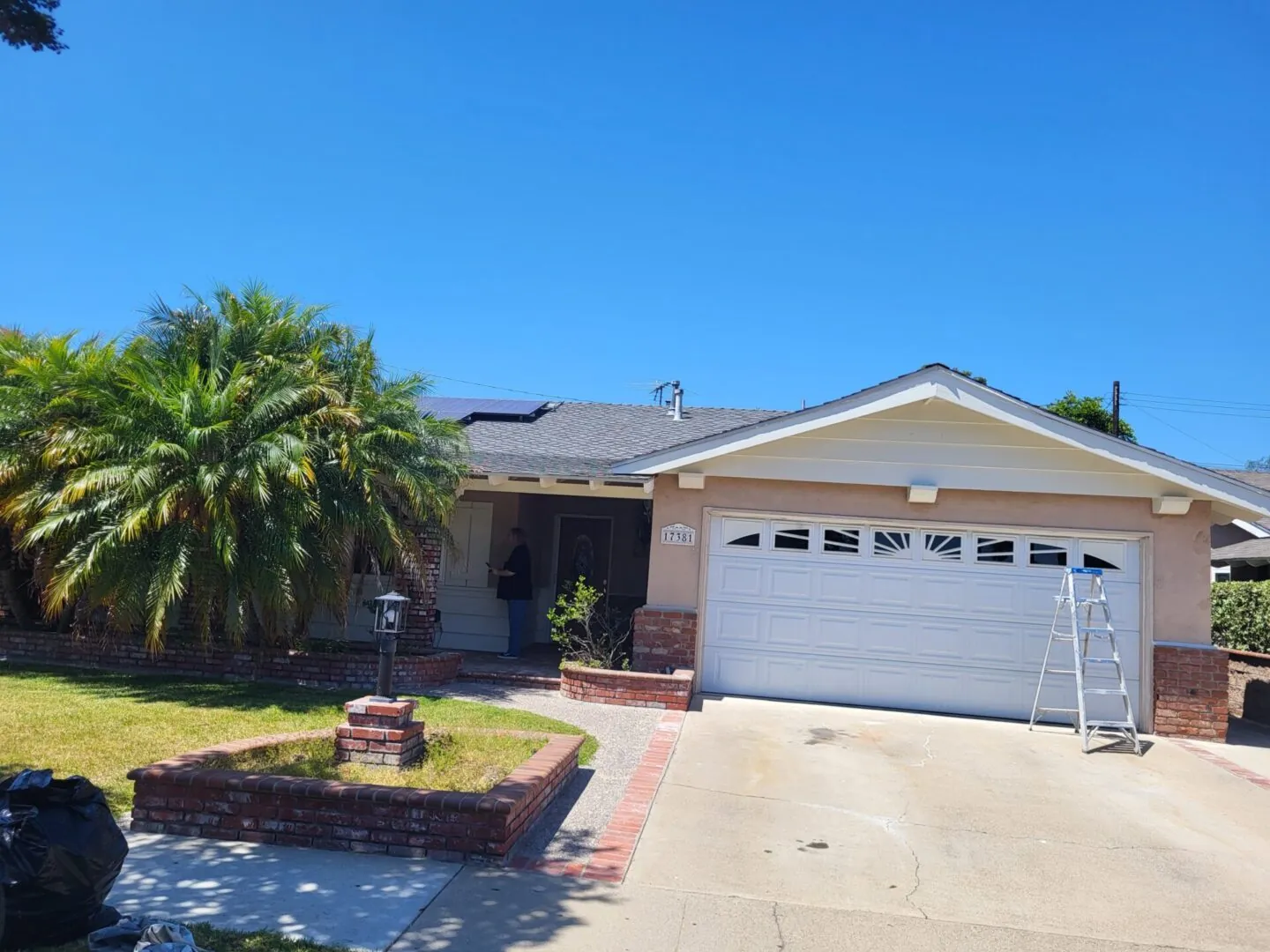
Stay off the roof. Wind-damaged roofs can have loose material, and falls are a real risk. You can learn a lot from the ground and the attic.
- Walk the property. Look at every side of the roof from the ground, with binoculars if you have them. Check the yard, gutters and downspouts for shingle pieces, tile fragments or piles of granules.
- Check the attic. On a sunny day, look for daylight through the roof deck. After rain, look for damp spots, stains or wet insulation.
- Check inside. Look at ceilings near exterior walls and around vents and skylights for new stains.
- Take photos. Take dated photos of anything you find, from the ground and inside. If you plan to talk to your insurance company, these help.
- Cover what you can safely. If water is coming in, move belongings and put down buckets. Leave tarping the roof to a professional.
- Get an inspection. Have a roofer check the edges, ridges, flashing and fasteners up close.
Here is what happens during a roof inspection so you know what a thorough one should cover.
Repair or replace after wind damage?
Many wind-damaged roofs just need a repair: replacing missing shingles, resealing lifted ones, resetting or replacing tile, and refastening flashing and ridge caps.
A replacement starts to make more sense when:
- Damage is spread across several slopes, not one area.
- The shingles are brittle enough that repairs break the surrounding shingles.
- The roof keeps losing shingles in every windstorm.
- The roof is near the end of its life anyway.
Matching can also be an issue. Older shingle colors may be discontinued, and a repair can stand out. Our post on repairing vs replacing a roof goes deeper on that decision.
About insurance: Whether wind damage is covered depends on your policy, your deductible and the cause of the damage. Call your insurance company or agent with your photos and ask how they want you to proceed. A written inspection and itemized estimate can help you understand the damage before that conversation.
How to make your roof more wind resistant
You cannot control the wind, but a lot of wind resistance comes down to how the roof is installed. When you re-roof, ask about these:
- Nailing: Correct nail count and placement in the shingle's nailing zone. Many shingles list a higher wind rating when installed with a specific nailing pattern.
- Starter strips: Proper starter shingles at eaves and rakes, so the first course is sealed down where uplift is strongest.
- Drip edge and flashing: Metal edges fastened securely so wind cannot get under the roof edge.
- Ridge caps: Matching ridge cap shingles fastened to the manufacturer's instructions.
- Tile fastening: Tile fastened and secured as required, with attention to rakes, hips and ridges.
- Heavier shingles: Architectural shingles generally hold up to wind better than 3-tab. See architectural vs 3-tab shingles.
Between re-roofs, keep up with small repairs. A single loose shingle gives the wind a place to start. Trim trees that overhang the roof, and have the roof looked at after major windstorms, especially if it is older.
Wind, fire and code: how they connect
Wind is also what drives wildfire embers. A roof with missing shingles, open tile ends or loose vents is more exposed to ember intrusion, not just rain. If your home is in a Fire Hazard Severity Zone, keeping the roof in good repair is part of your fire defense. We cover that in Class A fire-rated roofs.
Wind damage repairs usually do not need a permit, but a full re-roof does. If wind damage leads you to replace the whole roof, the new one may also have to meet California's cool roof and fire rules, depending on your address. A licensed roofer should explain what applies before you choose a product, so the roof you pick for wind resistance also passes inspection.
How Ocelot Roofing can help
If a windstorm has you worried about your roof, we will inspect it, show you photos of what we find, and give you a free, itemized estimate for the repair, or an honest recommendation if replacement makes more sense. The owner, Manny Torres, oversees every project from start to finish.
Learn about our roof repair services, request a free estimate, or call (866) 837-3311. We are open Monday to Friday 9am to 6pm and Saturday 9am to 3pm.
Common questions
How strong does wind have to be to damage a roof?
There is no single number. A new, well-installed roof can handle strong gusts, while an older roof with dried-out sealant or loose shingles can lose pieces in much milder wind. Edges, corners and ridges usually fail first, so those are the places to check after any strong wind.
Can I just glue down a lifted shingle myself?
It is not a good idea to get on the roof yourself, especially after a storm. A lifted shingle may also be creased or have loose nails, so it needs more than sealant. A roofer can reseal or replace it properly and check the shingles around it.
Should I get my roof checked before wind season?
Yes, if your roof is older or you have had repairs before. A quick pre-season check can catch loose shingles, cracked tile and lifted flashing before strong wind finds them. Fall, before Santa Ana season and winter storms, is a good time.

About the author
Manny Torres, Owner, Ocelot Roofing
Manny Torres owns Ocelot Roofing and personally oversees every project from estimate to final cleanup. Ocelot Roofing is part of Verde Home Design Inc., a third-generation family business based in Hesperia, CA.