Quick answer
Tile roofs usually leak because the underlayment beneath the tile has worn out, not because of the tile itself. Tile sheds most water, but the underlayment is the true waterproof layer, and it typically needs replacement around every 20 to 25 years. Other common causes are cracked or slipped tiles, failed flashing, clogged valleys and tiles broken by foot traffic.
Tile is the shield, not the waterproofing
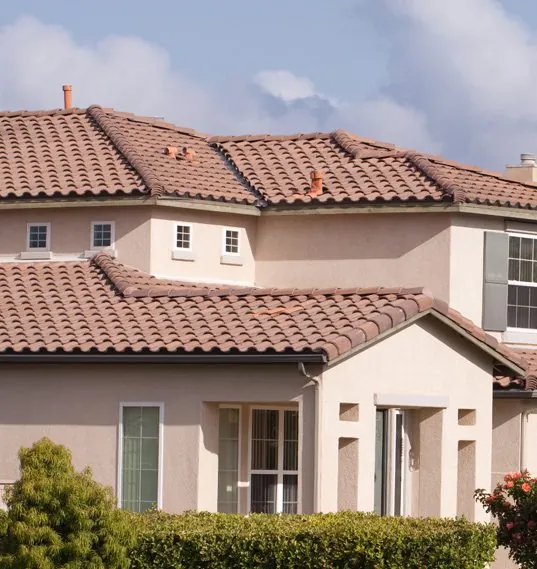
Concrete and clay tile is one of the toughest roof coverings you can put on a home. It handles sun and heat well and the tile itself can last 50 years or more. So it surprises a lot of homeowners when a tile roof leaks while every tile looks fine from the yard.
Here's the thing: tile isn't sealed together. Water gets under it by design, especially in wind-driven rain. The tile's job is to shed most of the water and protect what's underneath from sun. The underlayment under the tile is what actually keeps water out of your house.
Once you know that, most tile leaks make sense.
Cause 1: worn-out underlayment
This is the big one. The underlayment on a tile roof sits in a hot, dry space and takes years of heat cycling. Over time it dries out, cracks and tears, especially along the eaves, in valleys and around penetrations. As general guidance, it typically needs replacement around every 20 to 25 years.
In the High Desert, big day-night temperature swings and hot summers work older underlayment hard. Leaks from worn underlayment often show up after the first real storm of the season, like a summer monsoon or a winter rain.
This is also why patching a tile leak from the top so often fails. Sealing a crack or a gap in the tile doesn't help if the underlayment below has already torn. The water just finds the next weak spot a few feet away.
Because the underlayment wears across the whole roof at about the same rate, one leak from old underlayment is often a sign of more to come. When the tile is still in good shape, the usual fix is a tile lift and relay: take up the tile, replace the underlayment and battens, then set the tile back down.
Cause 2: cracked, broken or slipped tiles
A cracked tile lets more water reach the underlayment in one spot. If that underlayment is newer, it may hold for a while. If it's old, the crack becomes a leak.
Tiles also slip when fasteners fail or battens rot, leaving a gap. Gusty Victor Valley winds can lift and shift tiles too, especially at edges, hips and ridges.
Replacing a broken tile is usually a simple tile roof repair, but a good roofer will also check the underlayment below it. A cracked tile is often a symptom, and the real problem is underneath.
Replacement tiles should match the profile of the tile around them so they lock in and shed water the same way. A tile that doesn't quite fit can leave a gap that funnels water straight onto the underlayment.
Cause 3: flashing problems
Flashing is the metal that seals transitions: where the roof meets a wall, around chimneys and skylights, at plumbing vents and along valleys. On tile roofs, flashing has to be shaped to work with the tile profile, which makes it more involved than on a shingle roof.
Common flashing problems include:
- Rusted or cracked metal after years of sun and weather.
- Sealant that has dried out and pulled away, often used as a shortcut instead of proper flashing.
- Pipe and vent flashings that were never replaced during past roof work.
- Wall flashing covered by stucco that has cracked and lets water behind it.
Cause 4: valleys and debris
Valleys are where two slopes meet and carry the most water on the roof. On tile roofs, leaves, pine needles, windblown debris and even tile fragments can build up in valleys and act like a dam. Water then backs up and runs sideways under the tile, onto underlayment that may not be ready for it.
This is especially common near trees and in mountain communities like Wrightwood, Lake Arrowhead and Crestline, where needles and snow add up. Keeping valleys clear is simple maintenance that prevents a lot of leaks.
Valley metal itself can also wear out or be too narrow for heavy runoff. In snow country, melting snow can sit in a valley for days, which tests the metal and the underlayment beside it far more than a quick rain does. If your leaks show up under a valley, the valley flashing and the underlayment along it are the first things to check.
Cause 5: foot traffic
Tile is strong against weather but can crack under a person's weight if they step in the wrong place. Satellite installers, solar crews, painters, holiday light hangers and even well-meaning homeowners break tiles all the time without realizing it.
Anything mounted on the roof adds risk too. Every bracket, mount or cable run that goes through the tile needs its own flashing. When those are installed without proper flashing, or when tiles are cracked around them and never replaced, leaks often follow.
Please don't walk your own tile roof. If someone has been on your roof for any reason, it's worth having a roofer check for cracked tiles afterward, before the next storm finds them.
Other spots worth checking
A few more places where tile roofs commonly let water in:
- Ridge and hip mortar: older mortar can crack and fall away, loosening the cap tiles.
- Skylights: the flashing kit around a skylight has to be built for tile, and older skylight seals wear out on their own.
- Bird stop and eave closures: gaps at the eaves let birds and debris in, and damaged closures can let wind-driven water in.
- Low-slope sections: tile has minimum pitch requirements. A patio cover or addition that's too flat for tile may need a low-slope roofing system instead.
How Ocelot Roofing can help
A good tile repair starts with finding where water gets in, not just where it comes out. That usually means lifting tiles around the problem area, checking the underlayment and flashing, repairing what's damaged and resetting or replacing the tile. Your roofer should be able to show you photos of what was wrong.
Tile leaks take patience to trace, because water often travels along the underlayment and shows up inside far from where it got in. We find the real source, show you what we found and tell you honestly whether you need a repair, a lift and relay or a new tile roof.
You'll get a free, itemized, no-obligation estimate, and owner Manny Torres oversees every project from start to finish. Request your free estimate or call (866) 837-3311.
Common questions
Can I just seal a leaking tile roof with caulk or roof cement?
It might slow a leak for a short time, but it rarely fixes the cause. Most tile leaks come from worn underlayment or flashing below the tile, and surface sealant can trap water or hide the problem. It's better to find and repair the actual source.
Why does my tile roof only leak during certain storms?
Wind direction and rain intensity matter. Wind-driven rain pushes water under tile at angles it normally wouldn't reach, and heavy downpours can overwhelm clogged valleys. A leak that shows up only in some storms still points to a weak spot in the underlayment or flashing.
How can I tell if a tile roof's underlayment is worn out?
You usually can't see it from the ground. Clues include the roof's age, repeat leaks in different spots and water stains in the attic. A roofer can lift a few tiles in key areas to check the underlayment's condition directly.

About the author
Manny Torres, Owner, Ocelot Roofing
Manny Torres owns Ocelot Roofing and personally oversees every project from estimate to final cleanup. Ocelot Roofing is part of Verde Home Design Inc., a third-generation family business based in Hesperia, CA.